Four Pillars for Flexibility at Scale: Seven Years of Program Insights



Most flexibility programs work well for the easiest 20% of customers. Building programs that reach the other 80% — and deliver real grid value at scale — is a different challenge entirely. In this new series, ev.energy CEO Nick Woolley draws on seven years of experience across 50+ deployments to share what separates the programs that scale from the ones that stall.
The energy systems we depend on face a simple but urgent problem: they need to become dramatically cheaper, cleaner, and more resilient, all at the same time.
Data centers are driving load growth at a pace that grids were never designed for. In the US alone, data center demand is projected to consume up to 12% of all electricity by 2028 — and that number is accelerating. Renewable energy is typically abundant at the worst times for the grid and scarce at the best ones. EV adoption is accelerating faster than infrastructure investment. And the risk of outages — costly, dangerous, and politically toxic — is rising. The answer to all of these pressures is the same: flexibility at scale.
One of the most exciting developments we're watching closely is Bring Your Own Capacity (BYOC). The idea is straightforward but powerful: instead of building new peaking plants to serve surging data center and electrification demand, you build a massive VPP from behind-the-meter assets that already exist. EVs, batteries, flexible loads — coordinated at scale, they can mitigate data center load growth in real time, without a single new wire in the ground. We're working to demonstrate AI-driven DER orchestration with our platform. We'll share our findings as we go. The early results are already compelling.
The potential is seismic. EVs will be the single biggest source of flexibility on the grid by 2035, and other assets have a massive role to play, too. Batteries are growing rapidly right now as prices plummet, offering firm, scaled capacity that utilities can tap immediately. Getting the orchestration right across all of them is the real challenge.
A grid that can flex EV load intelligently is a grid that can absorb more renewables, defer expensive infrastructure upgrades, balance data center demand, and serve customers more affordably — saving electric ratepayers 10% versus their rates today, according to our analysis with research support from The Brattle Group. The math is compelling: up to $575 per EV per year in avoided cost. Across tens of millions of vehicles, that's a $30 billion annual opportunity sitting in driveways across America alone. That’s before you add other DER technologies.
But here's the problem: we're nowhere near that scale yet. And the gap between the promise of flexibility and the reality of today's programs is the most important challenge in our industry.
Seven Years In: Lessons Learnt
ev.energy has delivered more than 50 deployments with energy companies worldwide and acquired over 300,000 devices. We've had a privileged position to watch what separates the programs that scale from the ones that stall. I want to be clear: we're still learning. Every new program teaches us something, but certain patterns have become hard to ignore.
We've come to think of successful scaled programs as resting on four pillars: Reach, Experience, Value, and Trust. Get all four right, and scale follows. Miss one, and programs hit a ceiling.
This series is my attempt to share what we've learnt under each heading with enough honesty to be useful, and enough humility to acknowledge areas for growth.
Pillar 1: Reach — 100%, Not 70%
Here's an uncomfortable truth: most flexibility programs work brilliantly for the easy customers. The homeowner with a Level 2 charger and the right car brand. The tech-savvy early adopter who downloaded the app unprompted. That's maybe 10–20% of your EV population — and it is nowhere near enough to build a real VPP.
Scale demands reach. In practice, many programs today reach only around 70% of drivers — a direct consequence of vendors limiting the integration pathways they support. That 30% gap isn't a technical limitation. It's a design choice, and one that will compound as EV adoption accelerates. The same is true for other DER technologies. With our hardware-agnostic, scale-focused approach, ev.energy has a route to 100% of households in several of our programs today.
Real reach requires programs that work across every pathway; multi-path redundant integrations including AMI for those without eligible hardware, multi-channel enrollment to meet drivers where they are, and genuine inclusion of apartment dwellers, multi-family residents, and income-qualified communities. Reach isn't a compliance box. It's the foundational design constraint that determines whether your program ever gets big enough to matter.
Pillar 2: Experience — Multi-DER, Multi-Proposition
There's a version of flexibility that works perfectly in engineering terms and fails in the field. Correct architecture, correct dispatch logic, correct grid signals, but just 4% enrollment.
Experience is what bridges technical capability and real-world scale. The single biggest lever we've found is multi-proposition design: offering customers a solution to their challenges. For example, if you own solar, batteries and an EV, it's reasonable (and delightful!) to use a proposition that enables you to top up when the sun is shining. If you live in a multi-family complex, it’s reasonable to expect that you can participate in grid flexibility programs. If you charge in public, it's reasonable to desire a proposition that rewards you for charging in public at the right times for the grid.
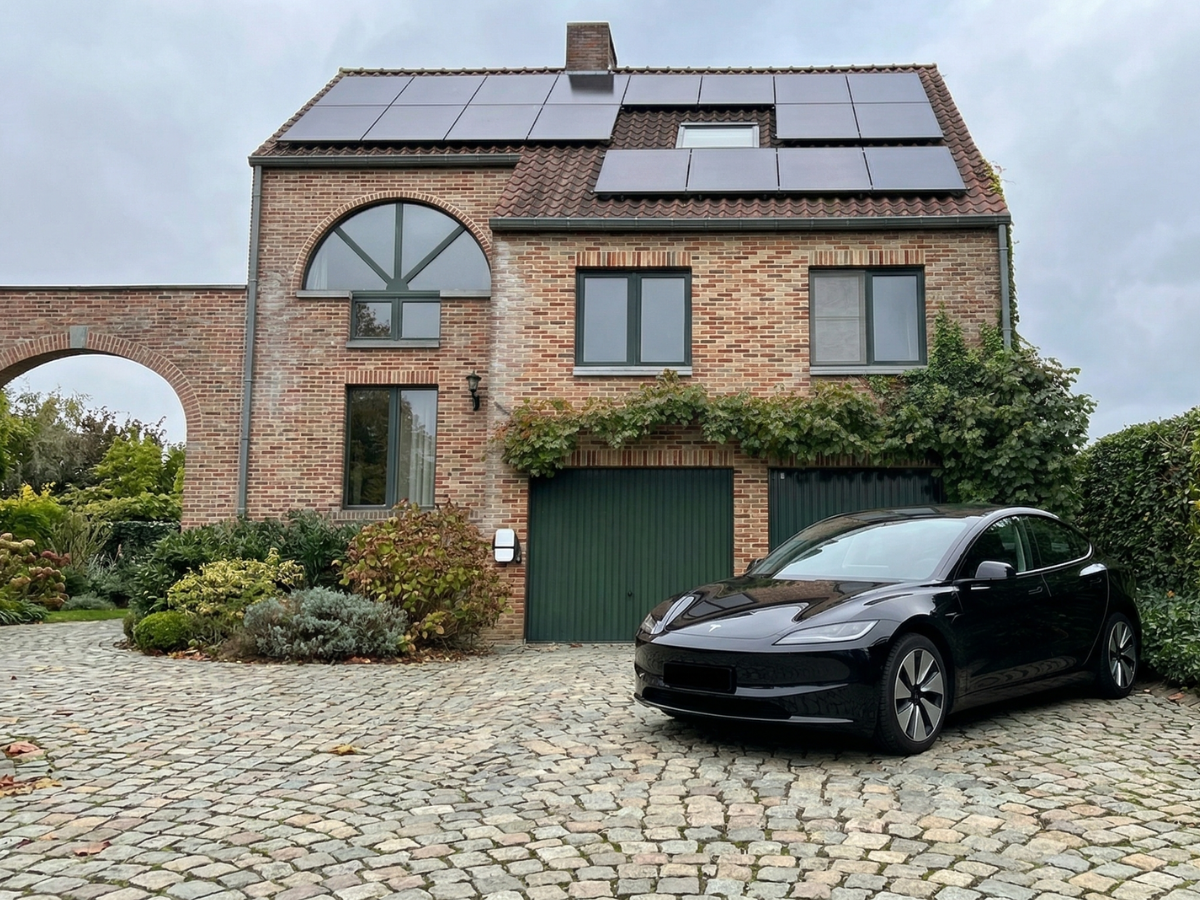
This is inseparable from multi-DER because the household of today doesn't just have an EV. It has solar, a battery, and in some cases a bidirectional charger too. Designing programs that orchestrate all of these assets together, and let customers participate through whichever combination they have, is what unlocks real scale.
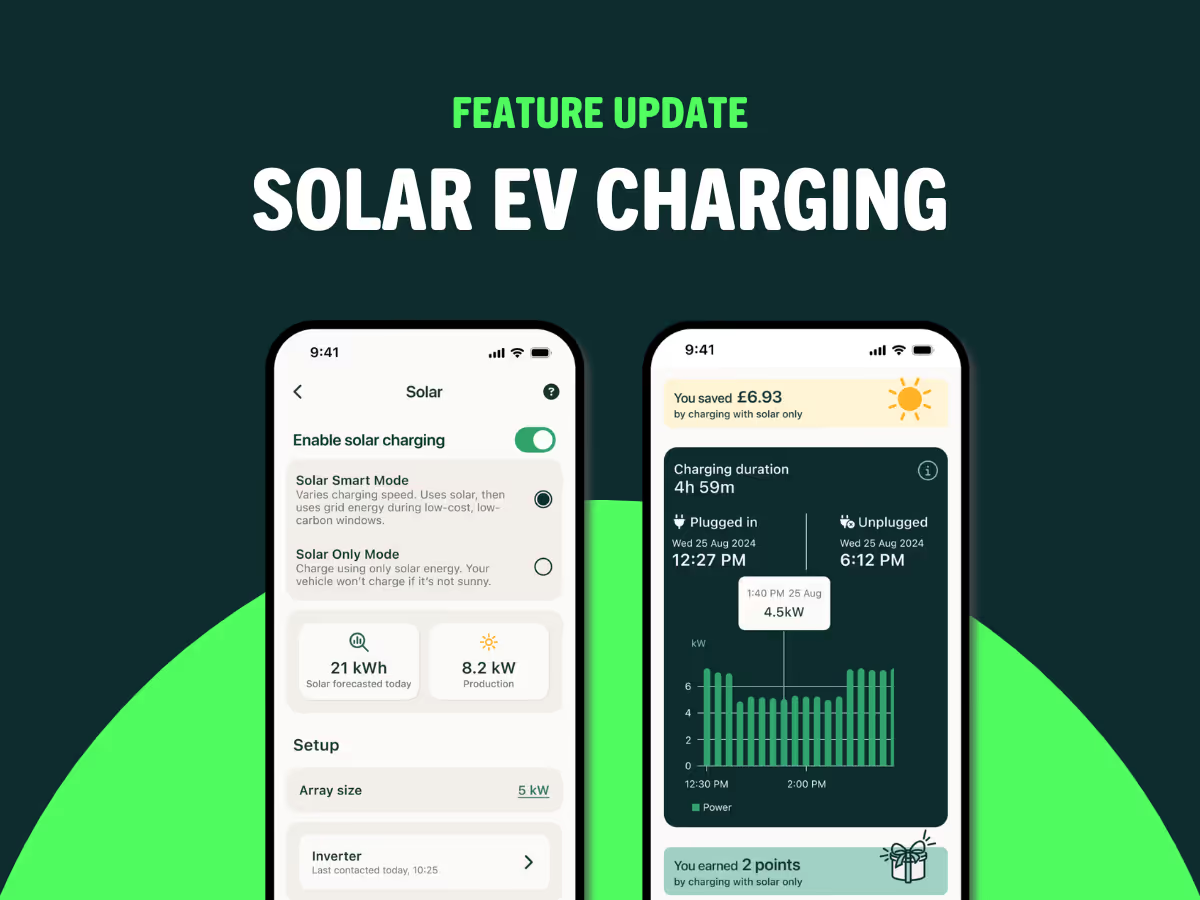
This isn't theoretical for us. We've been delivering solar, EV, and battery integration at scale globally for years. One of the things our end-users consistently tell us they love is charging on zero-carbon solar energy. It's one of the most tangible, emotionally resonant benefits of the whole proposition. That experience keeps customers engaged, which keeps them in the program, which keeps the flexibility flowing.
Pushing past 30% adoption isn't a communications challenge. It's a program design challenge; multi-DER, multi-proposition design is the answer.
Pillar 3: Value — Right Load, Right Time
The first thing that surprises most utilities is that megawatts don't tell the whole story. You can shift a lot of load, hit your system-peak reduction targets, and still generate little tangible value.
Value in flexibility is intrinsically local and time-bound. A transformer overloading in one suburban feeder doesn't care about system-wide load averages. A wholesale market signal at 4 pm in California doesn't solve the 6 pm distribution challenges in Boston. The programs we've seen deliver durable, scalable value treat distribution-level constraints as first-class problems, not afterthoughts.
What makes this possible is controlling load at the individual device level — managing assets from the grid-edge inwards. That means we can coordinate each asset to play its unique role, which delivers grid benefits across the whole system. Each asset unlocks value at the site level, the local feeder, the transmission network, and all the way through to the system level. That stack of value — realised simultaneously, not sequentially — is what makes flexibility programs worth funding at scale.
Pillar 4: Trust — Open, Transparent, Accountable
The fourth pillar is the one that gets the least attention in the short term and matters most in the long term. Scaled flexibility programs require trust from customers, from utilities, from regulators, and from the market.
Trust is built through openness and transparency. That means open APIs that let any car, any battery, any household participate. It means data privacy and security practices that put customers in control of their own information. We hold ourselves to the highest standards, including GDPR and SOC 2 compliance, because the grid infrastructure we help to manage demands it. It means deploying new technology like AI openly and transparently, explaining how it works and what decisions it makes, rather than treating it as a black box.
It also means being accountable for performance. Regulators need validated, trusted metrics — not self-reported claims. We work to provide independently verifiable proof of program performance: load shifted, peaks reduced, costs avoided. That evidential foundation is what turns a pilot into a program, and a program into a funded, scaled asset.
Scale is the Whole Point
None of these pillars exist in isolation. Reach without Experience means you enroll customers who churn. Experience without Value means you retain people in a program that doesn't deliver. Value without Trust means you build grid capacity on a foundation that regulators and customers will eventually reject. Trust without Reach means you've built something open and accountable that still only works for 20% of drivers.
Get all four right, and something different happens. You build genuine capacity; flexible, dispatchable load at a scale that changes the economics of the grid. That's what makes renewables easier to integrate. That's what manages data center demand without building new peakers. That's what makes BYOC valuable: a VPP large enough, reliable enough, and fast enough to stand in for conventional generation. That's what avoids outages and delivers affordable, secure energy for the long term.
We'll show what this looks like in practice as we demonstrate coordinated device-level control responding to data center demand signals in real time — not a future use case, but what we're building towards now.
That's the promise of the VPP. We're not there yet. But we're learning fast — and here I’ll share what we've found along the way, honestly, as the series progresses.
Onwards! — Nick
What’s the value of DER orchestration for your utility? Don’t wait months or years to find out. Model your unique scenario in minutes with ev.energy AI. Book a demo today.
%20(1).png)